
Why do some people consistently perform at extraordinary levels while others with the same knowledge, experience, and opportunity do not?
Keep reading. It took us twenty years of searching to find out.
in the field
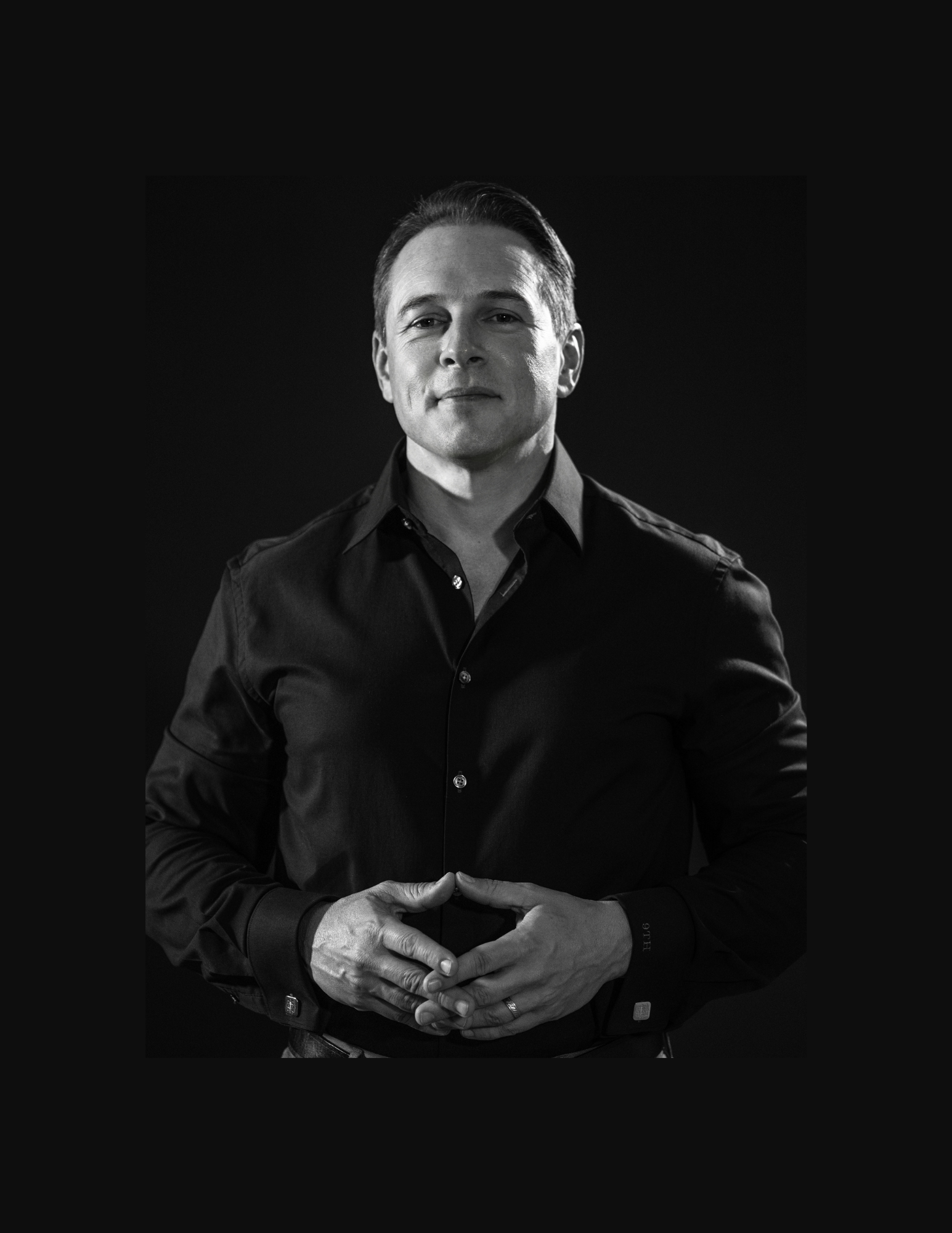
Aaron Salko
Aaron Salko has spent more than two decades studying one question: "Why do some people consistently outperform others—and can high performance actually be taught?
That question became an obsession.
Rather than studying performance only in laboratories or academic journals, Aaron studied it where it mattered most—in boardrooms, manufacturing plants, sales organizations, athletic programs, and leadership teams operating under real pressure. By combining research from psychology, neuroscience, physiology, biology, and human behavior with thousands of hours of real-world observation, he began identifying something that had largely been overlooked: The underlying skills that actually drive human performance.
That work became the foundation of the STRATUM 9 Framework, including the Nine Stratums of Performance and The S9 Performance-Based Skills™—a structured system for defining, measuring, teaching, and improving the human skills that determine how people think, communicate, lead, decide, adapt, and perform under pressure. The framework is built around skills that are teachable, measurable, applicable, and improvable, making high performance something that can be developed rather than assumed.
Today Aaron works with organizations to improve hiring, leadership, team performance, and organizational execution by helping people understand how high performance actually works—and how to intentionally build it.
"It turned out high performance wasn't something people were born with. It was something that could finally be defined."
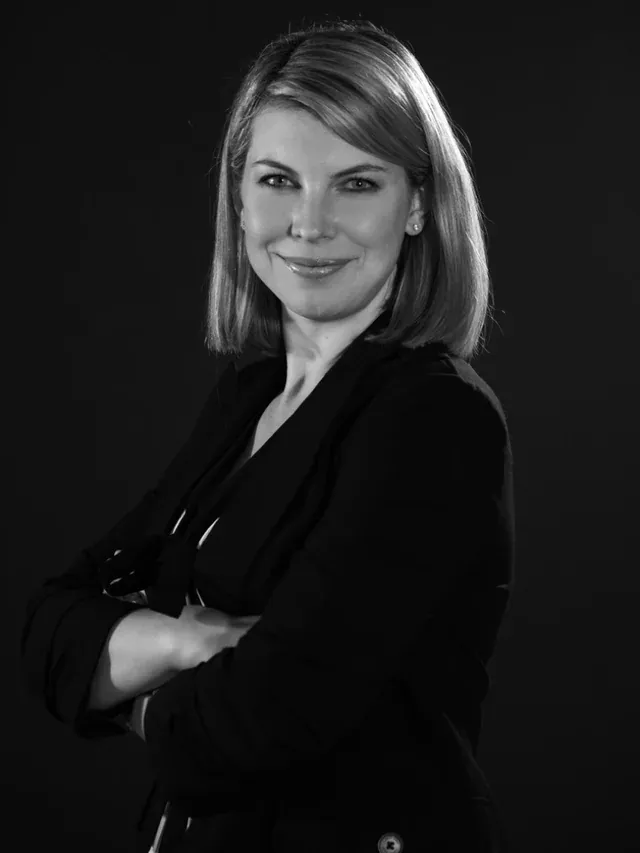
Kelly Johnson
While Aaron was uncovering why individuals perform at higher levels, Kelly Johnson became obsessed with a different question: Why do some teams and organizations continue to outperform everyone else, regardless of who's on the roster?
As the first female sales manager within an organization that had never had one before, she learned firsthand that sustained performance requires more than talented individuals. She focused on building environments where psychological safety allowed for honest feedback and coaching—and where teams consistently strived to perform at their best.
Working alongside Aaron, Kelly helped apply and refine the STRATUM 9® Framework in real teams and organizations, translating performance principles into leadership, coaching, culture, and execution. Over time, she became the person who could explain why a culture worked, not just confirm that it did.
Today she leads the organizational application of STRATUM 9, helping companies create cultures where performance isn't dependent on a few exceptional individuals—but becomes part of how the organization operates every day.
"Individual performance creates great people. Culture determines whether great people stay great together."
Two people, working independently toward the same question, eventually arrived at the same answer.
Across industries (hiring, leadership development, employee growth, and organizational performance), Aaron and Kelly kept finding the same problem at the root, no matter whose company they were working with.
Organizations weren’t failing because they were hiring bad people.
They were failing because they were making hiring decisions through interviewing that was inconsistent, unstructured, and untrained.
Strong candidates were passed over, and weak-fit candidates were hired, not for a lack of potential, but because the interview itself never asked the right question in the right way.
Poor interviewing leads to poor hiring. Better interviewing leads to better hiring.
Twenty years of research, and the conclusion was short enough to fit on a single sticky note.
That single sentence became S9 InnerView™
We took the STRATUM 9 framework, decades of research into how people actually perform, and paired it with artificial intelligence, not to replace human judgment, but to keep it from being the only thing standing between a good hire and a coin flip.
We built in structured interviewing methodology, stripped out bias wherever we could reach it, and added guardrails, audit trails, and scoring you can actually read the reasoning behind.
Every decision still ends with a person deciding it. That part was never up for negotiation.
AI assists. Humans decide.
Hiring was never really about who interviews best. It’s about who performs best.
Better interviewing is simply where that finally gets to start.
Every hiring manager who uses S9 InnerView still makes the final call, not the platform.
That isn’t a feature we added. It’s the reason any of this got built in the first place.