
Can I defend this decision later if it’s challenged?
Every S9 InnerView interview leaves behind a documented, consistent record: the skill set used, the evidence behind every score, and the interviewer’s own notes, reviewed by a person before it becomes a decision. That’s not a compliance claim. It’s what gets automatically captured, every time, whether or not anyone ever asks to see it.
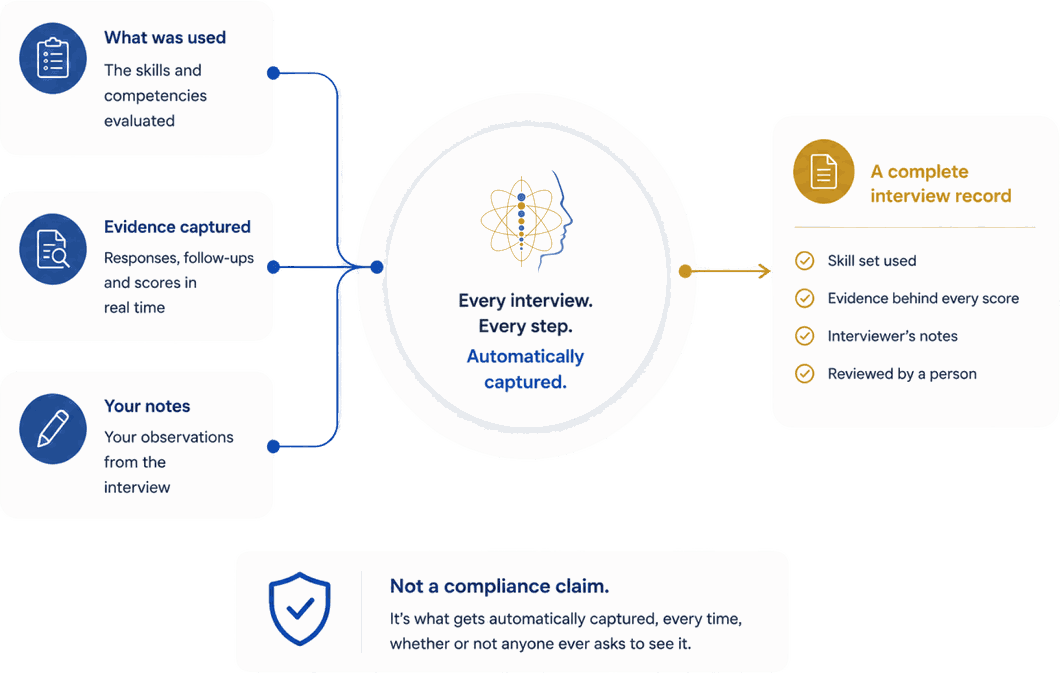
How It Works, Step by Step
Every step, on the record.
Every hire should be explainable after the fact, not reconstructed from memory.
Step 1
Build
The hiring manager sets the skill structure once per role.
Step 2
Interview
Every interviewer works within that same structure.
Step 3
Document
Decision paths, scoring rationale, and interviewer notes get captured automatically, as a byproduct of the process itself.
Step 4
Review
A person checks the record before it becomes a final decision.
Skill structure: Senior Product Designer
Communication, Systems thinking, Craft- JLJordan Lee
- RMRiley Morgan
- Decision path logged
- Scoring rationale saved
- Interviewer notes captured
“Defensible” is the word that actually matters here, not “accurate” or “fair” on their own, but whether you could explain a specific hiring decision, in detail, if it were ever challenged. The file already exists before anyone asks for it. That’s the entire point.

Compliance-by-Design, Not Compliance-by-Claim
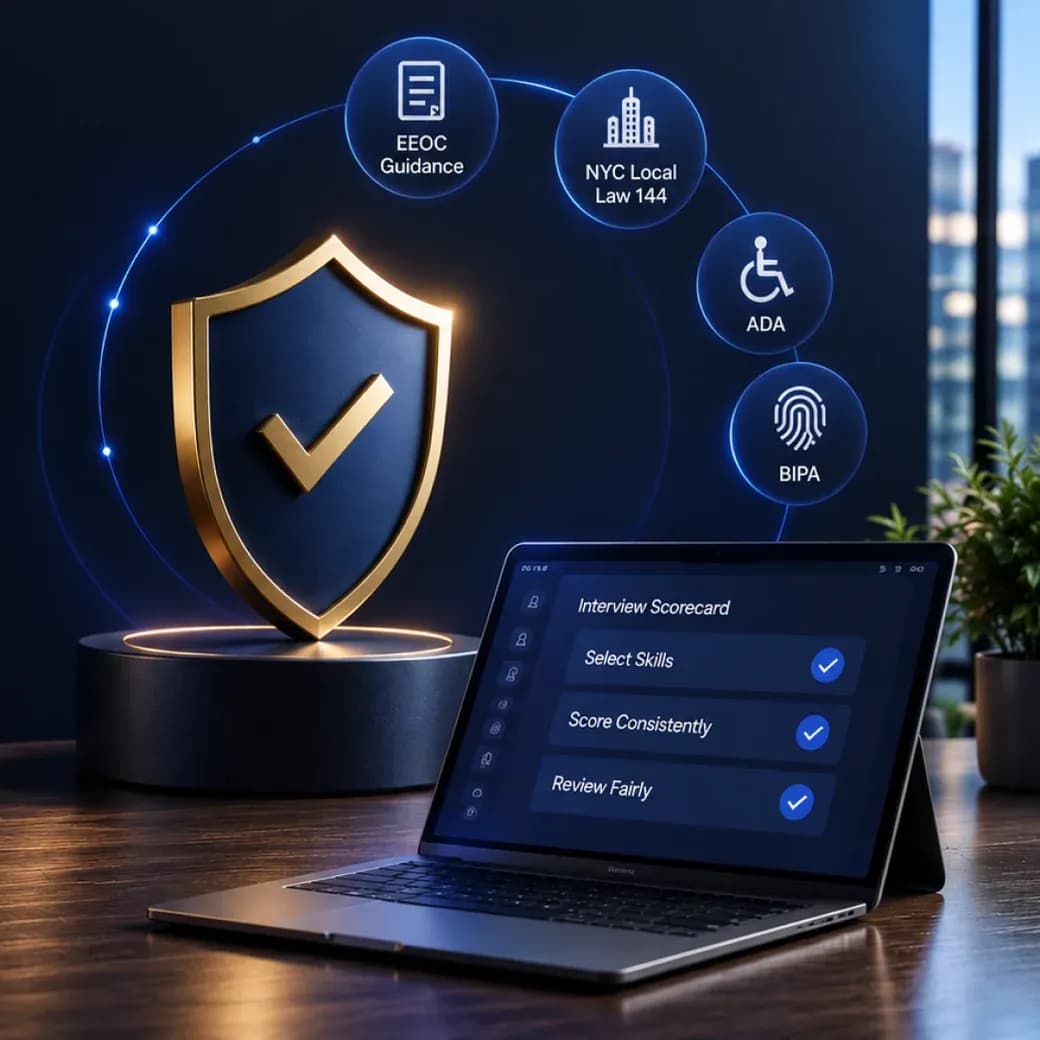
S9 InnerView is designed with EEOC guidance, NYC Local Law 144, the ADA, and BIPA in mind, shaping how skills are selected, scored, and reviewed. That’s design intent, not a claim of certification. See Responsible AI for the bias-and-ethics approach in full, and Security & Trust for how candidate data is actually handled.
Request the Science & Compliance packetFrequently asked questions
Decision paths, scoring rationale, interviewer notes, and competency alignment, captured for every hire, automatically, as part of the normal process rather than assembled under pressure after the fact.
InnerView is designed with EEOC guidance and regulations like NYC Local Law 144 in mind, shaping how skills are selected, scored, and reviewed. That reflects design intent, not a specific completed certification; see Responsible AI and Security & Trust for exactly what that does and doesn’t mean today.
Request the full methodology and compliance-design documentation behind every InnerView hire.
Still here? Respect.
You've read more than most interviewers read job descriptions.
Take five, here's something to listen to that isn't a cue card.