
Less back-and-forth. Not less rigor.
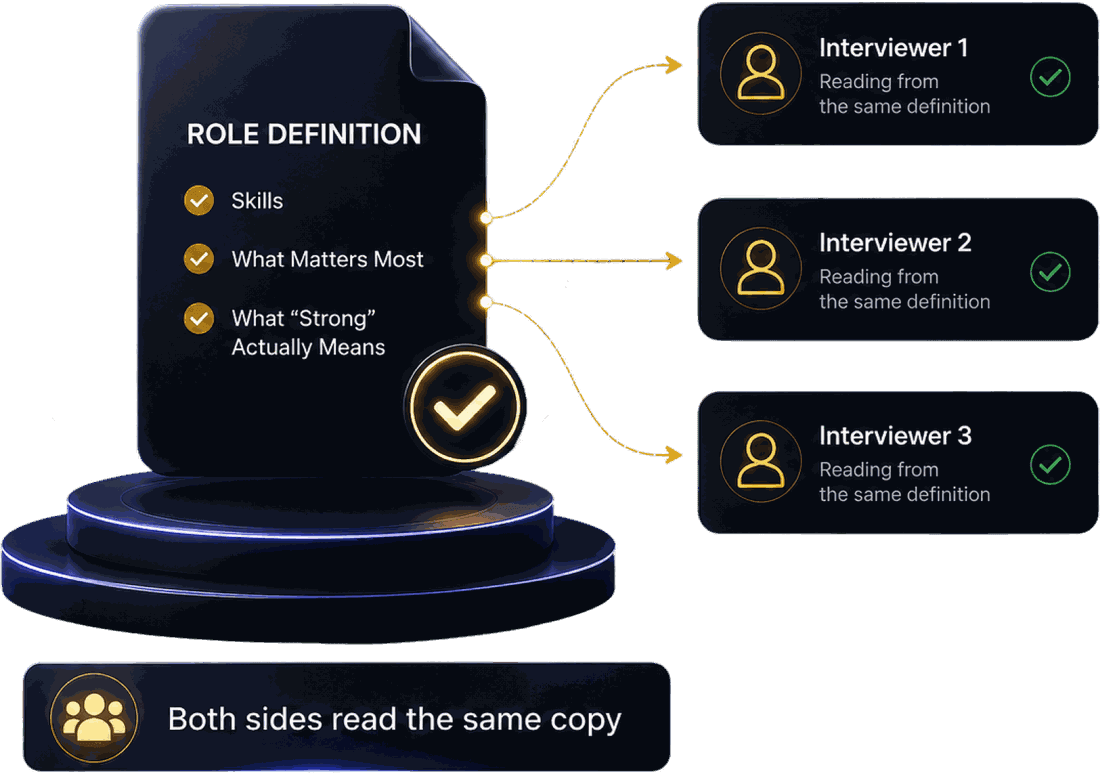
Every role used to get re-explained differently depending on who was asking and who was answering. S9 InnerView writes the definition down once both sides read the same copy, and you’re not the one holding the translation together in the middle.
The same document, from first draft to final score
Set up
Build the skill structure for the role once, with the option to loop the hiring manager into that review before it locks.
Lock in
The structure holds from there no re-litigating what “good” means for this role, interview to interview.
Interview
Every interviewer for the role works from the same finalized skill set, whether it’s round one or round ten.
Compare
Every scorecard comes back in the same format, ready to sit next to any other.
Foundational capabilities that drive long-term career success.
Role-specific skills essential for success in the position.
Alignment with the organization’s values, mindset, and ways of working.
Split across Career, Role, and Culture.
The Standard Carries Your Name
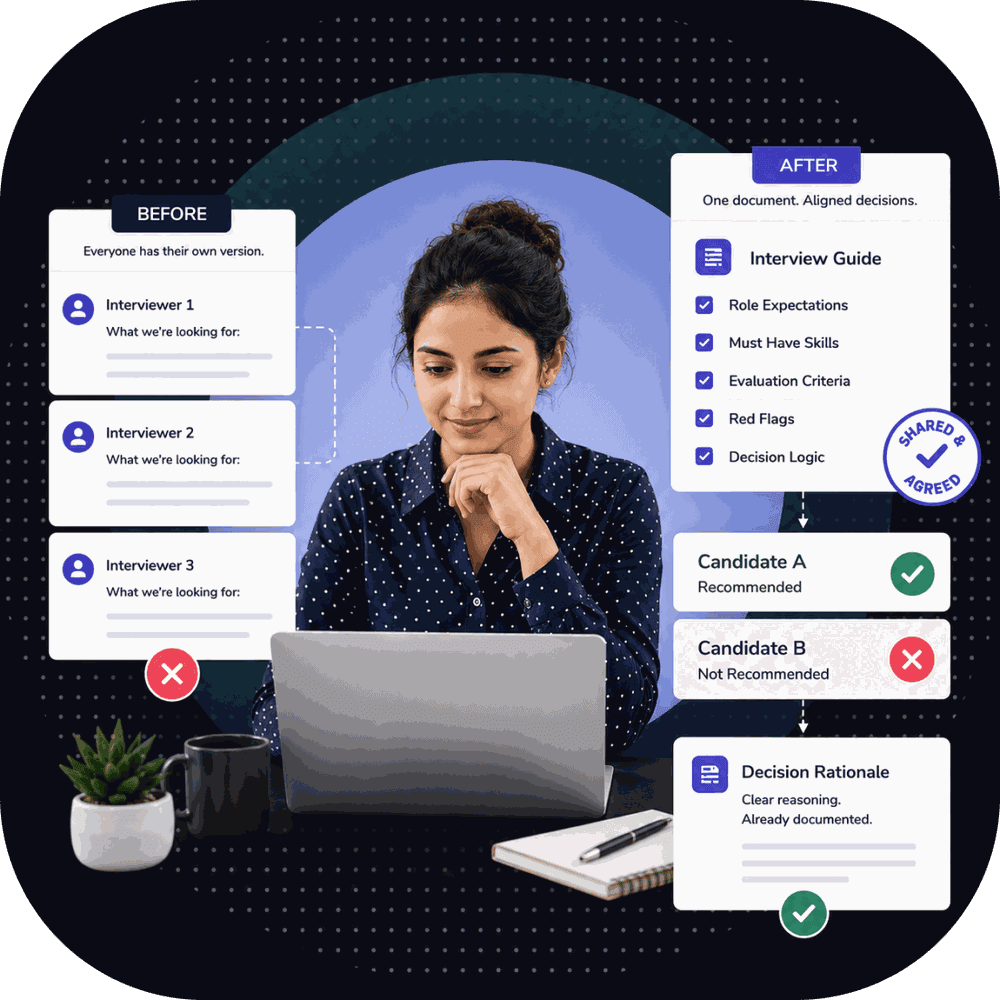
Before this, every interviewer quietly wrote their own version of “what we’re looking for” nobody assigned that job to them, it just happened, round after round, because nobody had written it down first.
Now there’s one document, and it’s yours.
When Candidate A gets the offer over Candidate B, the reasoning already exists. Nobody has to reconstruct it from memory.
The Final Decision Stays Yours
S9 InnerView organizes the evidence and shows its work it doesn’t hire anyone. The definition is yours. The call is yours. Everything in between just makes sure nobody’s working from a different draft than you wrote.

Frequently asked questions
No. You author the standard; anyone on your team can run the interview against it, and they're all reading from the same page literally.
Yes, and changes apply going forward. Interviews already scored against the prior version stay as they were, so you can see exactly what changed and when.
A scorecard against the skills you defined, evidence quotes tied to each score, and a transcript, all in the structure you set, not a generic template.
No. It's there if you want to start from a proven library, but you can define skills entirely in your own words instead.
Write it once. Let everyone downstream read from your copy.
Still here? Respect.
You've read more than most interviewers read job descriptions.
Take five, here's something to listen to that isn't a cue card.